
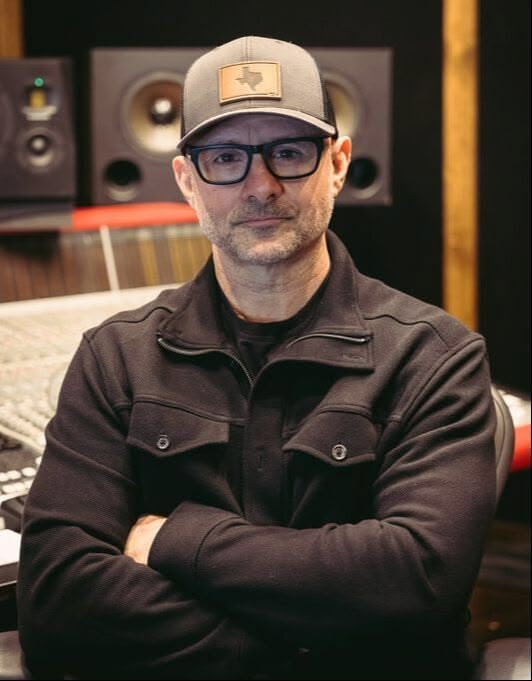
Record Huge, Professional Guitar Tones
Go inside the studio with multi-platinum producer and mixer Dan Malsch and discover how he records powerful, polished guitars that already sound finished inside a mix.
From choosing the right amp and dialling in the controls to microphone placement, pedals, preamps, DI recording, reamping, amp sims and final EQ, Dan walks you through his complete guitar recording workflow.
This is not simply a collection of guitar tones. You’ll learn why each sound works, how to create meaningful contrast between guitar layers, and how to make better recording decisions with whatever equipment you already own.
Learn From a Multi-Platinum Producer
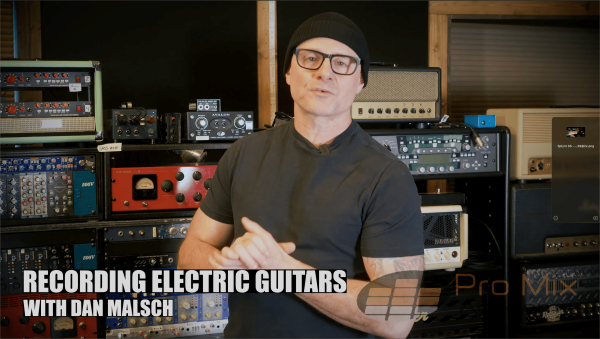
Dan Malsch is a multi-platinum producer, mixer and engineer known for powerful modern rock and metal productions. His work combines the weight and character of analogue recording with the flexibility of modern digital tools.
In this course, Dan shares the exact guitar recording principles he uses in professional sessions — explaining not only which settings he chooses, but why.
- Real studio recording demonstrations, not theory.
- Amp, microphone, pedal and preamp comparisons you can hear side by side.
- DI, reamping, amp-sim and modeling workflows for any size of studio.
- Downloadable multitracks and lifetime access.
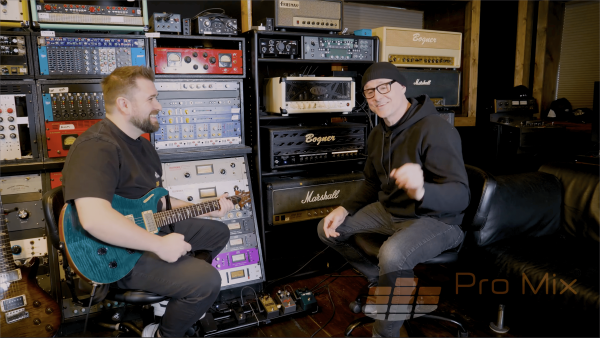
He is joined by guitarist AJ Larson, who shows how the amp settings feel from the player’s side and how technique, gain and response shape the final tone.
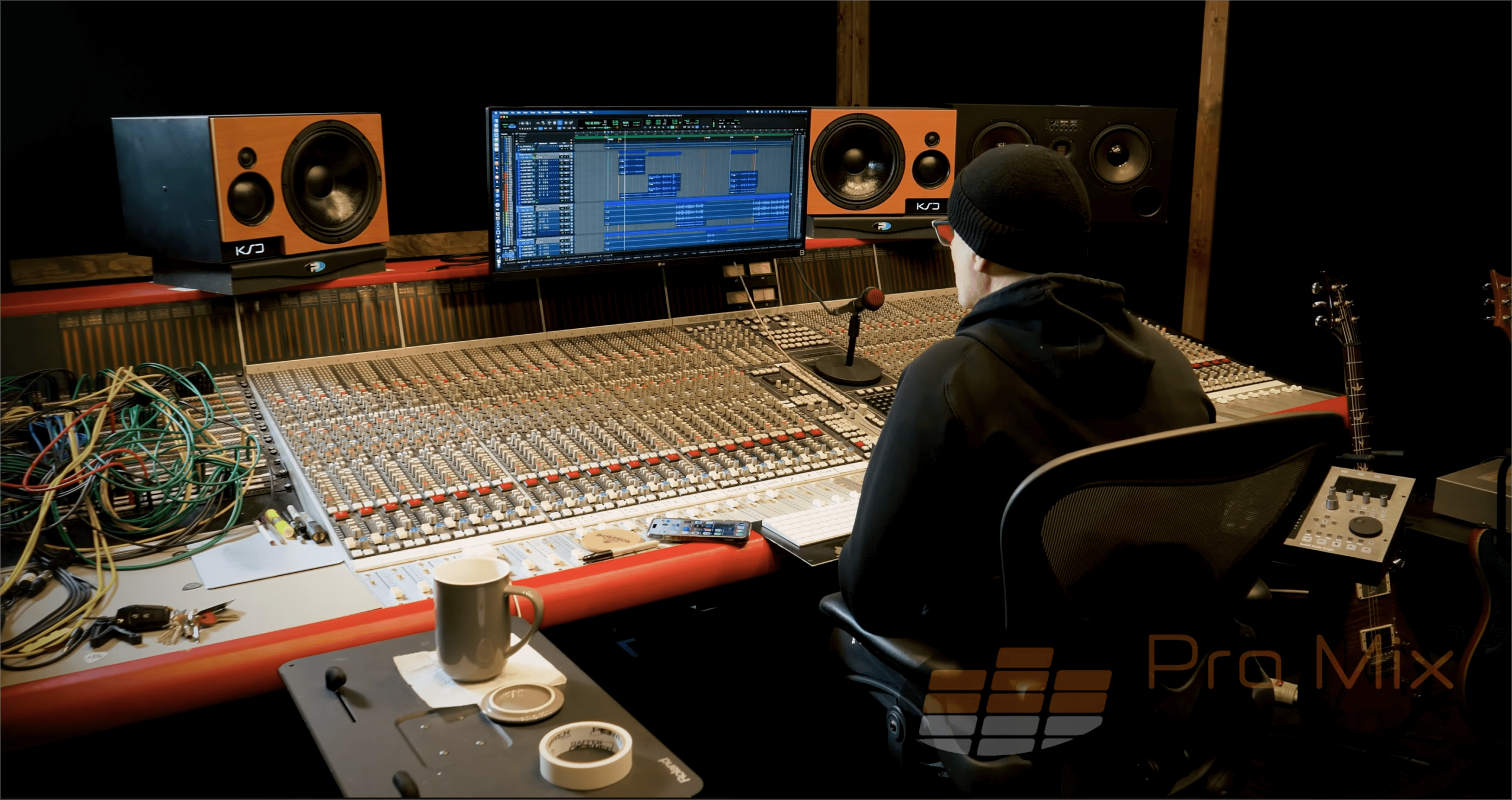
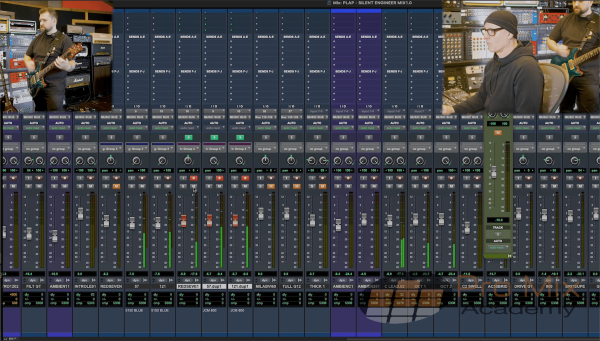
Stop Guessing. Record Guitars That Fit the Song.
A guitar can sound enormous in the room and still disappear — or create a mess — in the mix. The problem is rarely that you need more distortion, more low end or more expensive equipment.
The real skill is knowing:
- Which amp is right for the part, and how much gain it actually needs.
- Where to position your microphones, and how to combine them without phase problems.
- When to use pedals to tighten or reshape the amp.
- How to create width without simply duplicating the same tone.
- How to leave room for the bass, kick, vocals and cymbals.
- When a real cabinet, reactive load box, amp sim or modeler is the right choice.
Dan teaches you how to make these decisions by listening, comparing and recording guitars inside a real song.
Amps, Microphones, Pedals and Contrast
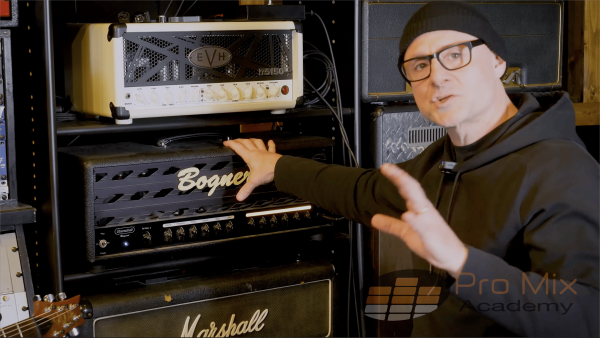
Choose the right amp. Hear a Marshall JCM800, Bogner Uberschall and EVH 5150 III compared in detail — why the Marshall’s aggressive midrange suits layered rock, how the Bogner delivers deeper low-end weight, and how the EVH covers everything from gritty cleans to modern high-gain.
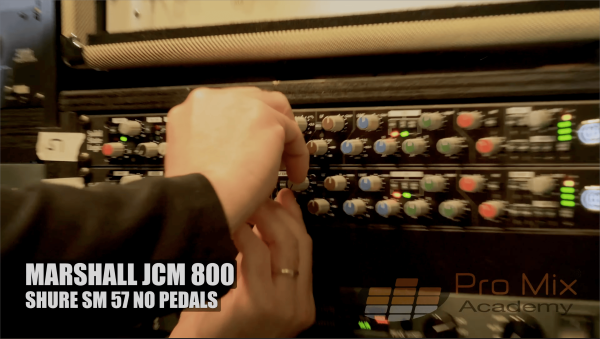
Dial it in by ear. Dan starts with every control neutral and moves one at a time, so you hear exactly what presence, bass, mids, treble, channel volume, master and gain really do on your amp — not what the labels claim.
Use less gain, get more power. Heavy guitars are built from layers. Too much distortion on every layer kills attack, definition and separation. Dan and AJ show how backing the gain off makes the result heavier.
Master the SM57 + Royer R-121. Where each mic sits on the cone, how to keep them in phase, and how to use the balance between them as an EQ. Want brighter? Turn up the 57. Want body? Bring up the Royer. Four microphones are compared — SM57, Royer R-121, Milab VIP-60 and Tul G12 — and a $100 SM57 still holds its own.
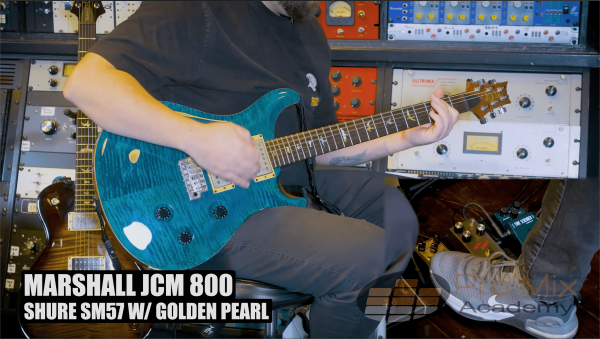
Transform one amp with pedals. A single JCM800 through a Tube Screamer, Friedman Golden Pearl and Super Boost. Then use contrasting pedals left and right for width — same guitar, same amp, two complementary tones.
Real Amps, DI, Reamping and Amp Sims
A loud valve amp can sound incredible and still be impossible in a home studio. Dan shows how to record a real amp silently through a reactive load box and cabinet simulation — head → reactive load → IR or cab sim → interface — using the EVH through a Red Seven Amp Central EVO.
Always record a DI. The clean DI keeps your transients visible for editing, lets you audition amp plugins after the session, and lets you reamp through a real amp while the performance plays back. It’s your insurance policy.
Dan then puts a 5150-style plugin head to head with the real EVH recorded through a cab, SM57 and Royer — and gets remarkably close. The lesson isn’t that one replaces the other. It’s that you have options.
You’ll also cover preamp character (SSL Revival 4000 vs Chandler Germanium), speaker and cabinet choice, Dan’s broad musical EQ approach — high-pass around 70 Hz, body around 200–250 Hz, thickness around 800–900 Hz, definition around 2–3 kHz — recreated with an SSL channel-strip plugin, plus compression for clean guitars and integrating a Fractal modeler into a real production.
Do not look. Listen. Turn the control, hear what happens, find the sound, then look at the setting.
What You’ll Walk Away With
By the end of the course you’ll know how to:
- Select the right amplifier for the arrangement and dial gain for definition and power.
- Position microphones accurately, keep them in phase, and use their balance as an EQ.
- Tighten amps with pedals and create real contrast between left and right guitars.
- Shape guitar tones while recording, and recreate analogue EQ moves with plugins.
- Record real amps through reactive loads and cabinet simulations.
- Capture a clean DI, edit from the DI waveform, and reamp performances.
- Compare real amps, amp sims and modelers — and compress clean guitars properly.
- Remove frequencies that fight the bass, kick and vocals, and commit with confidence.
Then watch it all happen for real. Dan and AJ record guitars for a new song by AJ’s band, Don’t Panic — EVH on one side, JCM800 and Tube Screamer on the other, SM57 and Royer through SSL Revival 4000 preamps, DI on every part. Nothing is staged. You see the listening, adjusting and re-takes until the tone and performance are right.
The multitracks are included, so you can balance the mics, try Dan’s EQ moves, swap the amp tone for your favourite plugin and rebuild the guitar mix yourself.
You don’t need Dan’s equipment collection. One amp, one SM57 and a thoughtful process will take you a very long way. The equipment creates options. Your decisions create the record.
This Course Is For You If…
- Your recorded guitars never sound as powerful as they do in the room.
- Your rhythm guitars turn blurry as soon as you add more layers.
- You’re unsure how much gain to use, or how to place a microphone on a cab.
- You want wider guitars without artificial stereo tricks.
- Your guitar tones fight the bass and kick drum.
- You want to record real amplifiers quietly, or learn DI recording and reamping.
- You own a small amount of equipment and want more tones out of it.
The best guitar mix begins during recording. Choose the right amplifier. Use less gain. Place the microphone carefully. Capture a DI. Create contrast between your layers. Remove the frequencies you already know you won’t need. Make every decision serve the song.
One payment. No subscription. Lifetime access, downloadable multitracks, and a complete professional guitar recording workflow you can use immediately.
Mentors
Endorsed by Legends and Pros Alike
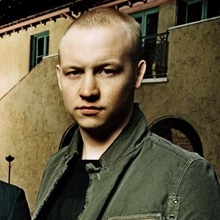
Issac Slade
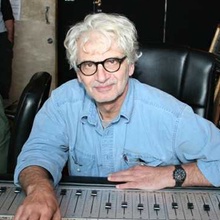
Jack Douglas
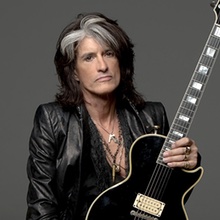
Joe Perry
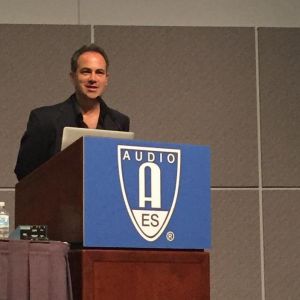
John Krivit
100% Satisfaction Guarantee
Don’t wait to get your hands on this amazing course. You can pick it up start learning right now. If for any reason you don’t feel that your productions and mixes have improved, simply shoot us an email within 30 days and we’ll give you a full refund, no questions asked.